Views: 0 Author: Site Editor Publish Time: 2026-02-19 Origin: Site
Manufacturing large, structural plastic parts presents a unique set of engineering hurdles. Warpage, creep, and unsightly sink marks frequently plague thick cross-sections, leading to high scrap rates and compromised aesthetics. Designers often find themselves stuck in a frustating material gap. Commodity plastics lack the necessary heat resistance and stiffness, while engineering resins like Nylon or Polycarbonate feel over-engineered and strain the budget. The strategic solution lies in PP TD40 Plastic Resin. This "bridge" material delivers exceptional stiffness and dimensional control without the high costs associated with hygroscopic engineering polymers. This guide evaluates the technical capabilities, processing realities, and ROI drivers of selecting this material for automotive, appliance, and industrial applications.
Maximum Rigidity: TD40 offers the highest flexural modulus in the mineral-filled PP class, nearly doubling the stiffness of unfilled PP.
Thermal Stability: Raises Heat Deflection Temperature (HDT) to ~130°C, making it viable for under-the-hood and high-heat appliance components.
Cycle Time ROI: Acts as a nucleating agent to speed up crystallization, significantly reducing cooling times and boosting production throughput.
The Trade-off: While superior in stiffness and cost, TD40 sacrifices impact strength and increases part weight (density) compared to lower-filled variants.
Engineers often default to 20% talc-filled compounds for general-purpose applications. However, moving to a 40% loading represents a significant leap in mechanical performance. This shift transforms polypropylene from a flexible commodity plastic into a semi-structural engineering material capable of bearing significant loads.
The primary driver for selecting PP TD40 is the dramatic increase in flexural modulus. Unfilled polypropylene is naturally flexible, making it unsuitable for large, unsupported spans like automotive door panels or appliance housings. By incorporating 40% talc, the stiffness nearly doubles compared to unfilled resin and shows a marked improvement over lower-filled variants.
This linear increase in rigidity allows designers to rethink part geometry. You can reduce wall thickness significantly while maintaining the same deflection under load. Thinner walls translate to less material usage and faster cooling times, which often neutralizes the cost of the added mineral filler. For projects operating on tight margins, this stiffness-to-cost ratio is unbeatable.
When high stiffness is required, Glass Fiber (GF) PP is the usual competitor. However, glass fibers introduce a specific problem: anisotropy. Glass fibers are long and tend to align with the flow of the plastic during injection. This alignment creates differential shrinkage—the part shrinks differently along the fiber compared to across it—leading to severe warpage in large, flat components.
In contrast, Mineral Reinforced Polypropylene uses plate-like talc particles. These platelets orient themselves in layers but generally offer isotropic shrinkage. This means the material shrinks evenly in all directions. For applications like liftgates, expansive instrument panels, or large HVAC covers, TD40 provides the necessary flatness that glass fiber simply cannot guarantee.
Feature | Glass Fiber PP (30%) | Talc Filled PP (40%) |
|---|---|---|
Shrinkage | Anisotropic (Warpage Risk) | Isotropic (Flatness Control) |
Stiffness | Extremely High | High |
Surface Finish | Rough / Fiber Read-through | Smooth / Matte |
Tool Wear | High (Abrasive) | Low to Moderate |
Temperature resistance is often the Achilles' heel of commodity plastics. Standard unfilled PP begins to soften and lose structural integrity around 60–80°C. This limitation rules it out for many functional parts.
The addition of 40% talc pushes the Heat Deflection Temperature (HDT) at 0.45 MPa up to approximately 130°C. This shift is critical. It opens the door for under-the-hood automotive components that must withstand engine heat, as well as dishwasher internal components exposed to hot water and drying cycles. By bridging this thermal gap, manufacturers avoid the need for expensive engineering plastics like Polyamide (Nylon) for medium-heat applications.
Beyond raw mechanical data, the behavior of the material during and after molding defines its success. Large plastic parts are notorious for post-molding deformation. High-loading talc compounds address these physics directly.
Sink marks occur when the inner volume of a thick plastic section cools and shrinks, pulling the outer surface inward. This creates visible depressions that ruin the aesthetic quality of the part. This is a frequent issue in designs featuring ribs, bosses, or varying wall thicknesses.
Talc particles do not shrink. By displacing 40% of the polymer volume with mineral, you significantly reduce the overall volume of material available to shrink. Consequently, Injection Grade PP with high talc loading effectively holds its shape in thick sections. Designers can include robust structural ribs without fear of reading them through to the visible "A-surface" of the part.
Creep, or cold flow, is the tendency of a solid material to move slowly or deform permanently under the influence of mechanical stresses. Unfilled PP has poor creep resistance; a snap-fit under tension will eventually loosen, and a shelf bearing weight will eventually sag.
The rigid mineral network within a Modified PP Resin resists this molecular movement. TD40 maintains its dimensions under continuous load far better than lower-filled alternatives. This long-term stability is vital for structural brackets, fasteners, and clips that must maintain tight tolerances over years of service.
Aesthetics often dictate material choice as much as performance. High talc loading offers two distinct surface advantages:
Matte/Satin Finish: The mineral filler naturally diffuses light reflection. This creates a low-gloss, premium look that effectively hides flow lines and minor surface imperfections. It eliminates the "cheap plastic" shine often associated with commodity resins, reducing the need for expensive mold texturing or painting.
Scratch Resistance: Talc is harder than the polymer matrix. A 40% loading increases the surface hardness (Rockwell R scale), making the part more resistant to marring and scratching. This is a key requirement for automotive interiors, such as lower instrument panels and center consoles, which face daily abuse.
The purchase price of the resin is only one component of the total part cost. Processing efficiency often plays a larger role in the final Total Cost of Ownership (TCO). This is where high-talc compounds often surprise production managers.
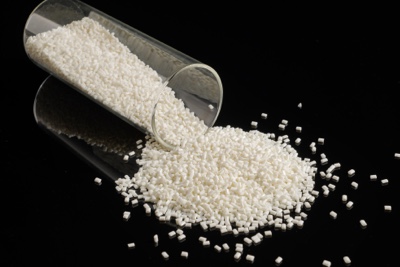
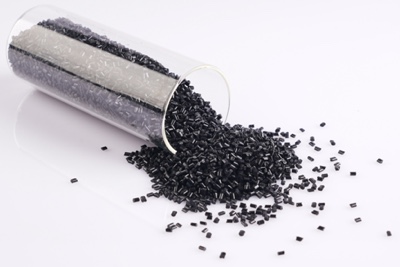
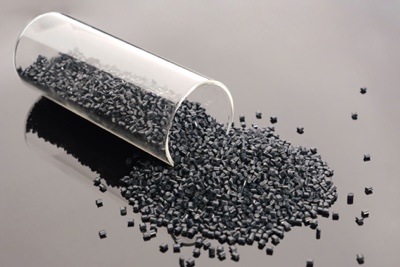
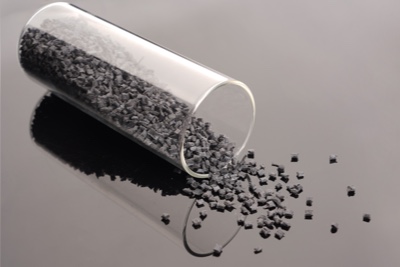
Running PP TD40 Granules can significantly boost plant throughput. Talc acts as a powerful nucleating agent. It provides billions of microscopic sites for the polypropylene crystals to form, accelerating the crystallization process. The polymer solidifies faster.
Furthermore, minerals conduct heat much more efficiently than the insulating polymer. This improved thermal conductivity allows heat to escape the mold cavity rapidly. Parts reach their ejection temperature quicker, shaving 10–20% off the cooling cycle. For high-volume production runs, this reduction in cycle time increases machine capacity and directly improves profit margins.
Smart engineering involves specifying the "just right" material rather than the "best possible" one. Many legacy parts are molded in ABS or Polyamide (Nylon) simply out of habit or fear of thermal failure. Replacing these with High Stiffness PP yields immediate savings.
Consider the cost drivers:
Raw Material Cost: PP is generally cheaper than ABS or Nylon.
Processing Energy: PP processes at lower temperatures.
Drying: Unlike Nylon and ABS, polypropylene is non-hygroscopic and typically requires no pre-drying, saving energy and eliminating a production bottleneck.
There is a financial trap to watch for: density. Unfilled PP is lightweight (0.90 g/cm³). However, 40% Talc Filled Polypropylene is significantly heavier, with a density around 1.25 g/cm³.
Since plastic is bought by weight (per pound or kilogram) but used by volume (filling a mold cavity), the extra density means you use more weight of material per part. When calculating savings, purchasing teams must calculate the cost per part (Volume × Density × Price/lb), not just the price per pound. Usually, the cycle time reduction and lower base resin cost still result in a net savings, but the math must be precise.
No material is perfect. The gains in stiffness and heat resistance come with specific penalties that engineers must mitigate.
The "Brittleness" factor is the primary downside of high mineral loading. As stiffness increases, impact strength invariably decreases. The polymer chains are interrupted by mineral particles, creating pathways for crack propagation.
When compared to PP TD20 or impact-modified copolymers, TD40 will show significantly lower Charpy or Izod impact scores. It is generally not suitable for parts subjected to high-velocity impacts, crash-safety components, or applications in extreme cold environments where the material may shatter. If impact is a concern, designers should look for impact-modified grades of TD40, though these may sacrifice some stiffness.
In the automotive sector, lightweighting is a religion, especially for Electric Vehicles (EVs) where every gram affects range. Replacing a standard plastic part with a 40% mineral-filled version adds roughly 35% more mass to that specific component.
This weight penalty is counterproductive unless the superior stiffness allows for substantial wall thinning. If you cannot reduce the wall thickness to offset the density increase, TD40 might not be the right choice for strictly weight-critical applications.
High-talc compounds are prone to "stress whitening" or chalking. If the part is bent, impacted, or forced into a snap-fit during assembly, the area of stress may turn white. This is caused by micro-voids forming around the talc particles. While this does not always indicate structural failure, it is visually unacceptable on visible (A-surface) parts. Proper gate location and design that avoids excessive bending during assembly are crucial preventive measures.
Not all TD40 compounds are created equal. The quality of the talc and the compounding technology define the final performance.
The size of the talc particles dictates the balance between stiffness and toughness. "Top size" refers to the largest particles, while "median size" represents the average.
Fine Talc: Improves impact balance and surface finish but is more expensive.
Coarse Talc: Cheaper and provides excellent stiffness, but makes the part significantly more brittle.
You must also verify dispersion quality. Poorly dispersed talc forms agglomerates—clumps of mineral that act as stress concentrators, leading to premature part failure and surface flaws. Always request filtration data or micrographs from your supplier.
Sustainability mandates are pushing manufacturers toward recycled content. Fortunately, Automotive Grade PP with recycled bases is highly viable. Industry data demonstrates that recycled TD40 compounds can achieve Process Capability Indices (Cp/Cpk) that meet strict automotive standards.
The key is feedstock control. Post-industrial recycled (PIR) sources are generally more consistent than post-consumer (PCR) sources. When specifying recycled TD40, ensure the technical data sheet (TDS) specifies a consistent melt flow rate (MFR) range to ensure stable processing.
Finally, distinguish between the base resins. Talc Filled PP is available as:
Homopolymer (PPH) TD40: Provides maximum stiffness and heat resistance but is very brittle. Best for high-heat structural parts that don't take impact.
Copolymer (PPC) TD40: Offers a better balance of impact strength while retaining most of the stiffness. This is the preferred choice for most automotive and appliance applications.
PP TD40 occupies a vital strategic position in the material selection matrix. It serves as the go-to Modified PP Resin when dimensional accuracy, heat resistance, and stiffness are non-negotiable, yet the project budget cannot support premium engineering thermoplastics. By understanding the trade-offs regarding density and impact strength, engineers can leverage this material to produce flatter, more rigid parts with faster cycle times. As a final best practice, always prioritize mold flow analysis to account for the specific isotropic shrinkage rates of high-talc compounds before cutting steel.
A: The main difference is the talc loading percentage (20% vs. 40%). PP TD40 offers significantly higher stiffness (flexural modulus), better heat resistance, and lower shrinkage/warpage. However, PP TD20 is lighter, has better impact strength, and is less brittle.
A: PP TD40 typically has a density (specific gravity) between 1.22 and 1.27 g/cm³, compared to ~0.90 g/cm³ for unfilled polypropylene. This added weight must be factored into cost-per-volume calculations.
A: Generally, PP TD40 granules do not require drying as polypropylene is non-hygroscopic. However, if surface moisture is present due to storage conditions, or if the compound contains specific hygroscopic additives, drying for 2–3 hours at 80°C may be recommended to prevent surface splay.
A: Yes, but it typically requires UV stabilization packages. It is widely used for "zero gap" exterior trim, rocker panels, and structural components where dimensional stability is critical to maintaining flush fits with sheet metal.
A: Talc acts as a dimensional stabilizer. 40% Talc Filled Polypropylene has significantly lower mold shrinkage (typically 0.4%–0.8%) compared to unfilled PP (1.5%–2.0%). Crucially, talc promotes isotropic shrinkage, reducing the risk of warping in large, flat parts.