Views: 0 Author: Site Editor Publish Time: 2026-02-21 Origin: Site
When design engineers first review the material data sheet for 40% talc-filled polypropylene, they often pause at the density figure. The specific gravity typically sits around 1.25 g/cm³, a significant jump from the 0.90 g/cm³ found in unfilled homopolymer polypropylene. On the surface, this appears to contradict modern lightweighting initiatives. Why specify a heavier material when the goal is often to reduce mass? This objection, while common, overlooks the broader economic and structural reality of the manufacturing process.
The counter-argument lies in the "system cost" rather than the raw material weight. The increased density is not merely dead weight; it brings a substantial increase in stiffness (flexural modulus) and thermal stability. This rigidity allows engineers to thin out wall sections significantly without compromising structural integrity, often neutralizing the weight penalty. Furthermore, the presence of talc accelerates crystallization, driving faster cycle times that reduce total manufacturing costs. This article analyzes PP TD40 as a strategic alternative to expensive engineering plastics like ABS or PA6, demonstrating how it serves as a high-performance solution for durable goods.
Material Substitution: PP TD40 Plastic Resin bridges the gap between commodity PP and engineering thermoplastics, offering varying degrees of metal replacement potential at a lower price point.
Cycle Time ROI: Talc acts as a nucleating agent, significantly reducing cooling times and increasing production output by 15–30% compared to unfilled resins.
Dimensional Precision: High mineral loading minimizes mold shrinkage (down to ~0.7%) and eliminates sink marks in thick-walled sections.
The Trade-off: While flexural modulus peaks at 40% loading, impact strength and density require careful design adjustments.
The primary driver for adopting high-loading mineral compounds is often economic. However, the savings do not come solely from the price per kilogram of the resin. The value proposition becomes clear when we look at material substitution and the total cost of ownership for the molded part.
For decades, applications requiring high rigidity and dimensional stability defaulted to engineering resins like Acrylonitrile Butadiene Styrene (ABS) or Glass-Filled Nylon (PA6). While these materials perform well, they come with a high price tag and often require pre-drying, which consumes energy. PP TD40 Plastic Resin has emerged as a formidable competitor in this space.
When you compare the cost-per-volume, modified polypropylene offers a distinct advantage. Even though the density of 40% talc-filled PP (1.25 g/cm³) is comparable to ABS (1.04–1.08 g/cm³) and lower than glass-filled nylon (1.35+ g/cm³), the raw material cost of the polypropylene base is significantly lower. By switching to a modified commodity resin, manufacturers can achieve a flexural modulus of approximately 3.2 GPa—approaching the stiffness of engineering plastics—at a fraction of the material cost.
The "density penalty" of adding 40% mineral filler is often a concern, but it can be mitigated through smart design. Because 40% Talc Filled Polypropylene is roughly three times stiffer than unfilled PP, parts do not need to be as thick to carry the same load.
Design engineers can leverage this superior rigidity to reduce wall thickness. For example, reducing a part's wall thickness from 3.0mm to 2.2mm can offset the 30-40% increase in density. This concept, known as "neutral weight" designing, allows you to utilize a heavier resin without increasing the final part weight. You gain the benefits of higher stiffness and heat resistance without burdening the logistics or handling of the final product.
Beyond the pellet price, processing factors heavily influence the total cost. Engineering plastics like nylon require higher processing temperatures (often exceeding 260°C) and mandatory drying steps to prevent hydrolysis. Polypropylene is naturally hydrophobic, eliminating the need for drying equipment and the energy costs associated with it. Additionally, PP processes at lower temperatures (200°C–240°C), resulting in direct energy savings at the barrel. When combined with reduced scrap rates due to the superior dimensional stability of talc-filled grades, the TCO for durable goods drops significantly.
Understanding where 40% loading fits within the spectrum of polypropylene compounds is vital for correct specification. It is not simply "more is better"; it is about matching the material properties to the mechanical requirements of the application.
The addition of talc creates a linear increase in stiffness, but the jump from 20% to 40% changes the material's classification from "general purpose" to "structural."
Unfilled PP: This material is flexible, chemically resistant, and tough, but it lacks rigidity. It is prone to warping in large, flat sections and cannot support significant weight without deflection.
PP TD20: Often considered the "balanced" standard. PP TD20 / PP TD30 grades offer a good compromise between improved stiffness and retained impact strength. They are widely used in automotive bumpers and interior trims.
PP TD40: This is the "structural" choice. At 40% loading, the flexural modulus spikes, making it suitable for load-bearing appliance parts like washing machine pulleys or automotive under-hood brackets.
Property | Unfilled PP | PP TD20 | PP TD40 |
|---|---|---|---|
Density (g/cm³) | 0.90 | 1.05 | 1.25 |
Flexural Modulus (GPa) | 1.2 | 2.2 | 3.5+ |
Mold Shrinkage (%) | 1.5 - 2.0 | 1.0 - 1.2 | 0.5 - 0.7 |
HDT @ 0.45 MPa (°C) | 85 - 100 | 110 - 120 | 130 - 140 |
For durable goods that must endure years of operation, short-term data is not enough. You must consider how the material behaves under load over time (creep) and heat. Unfilled polypropylene loses mechanical strength rapidly as temperatures rise. However, the platy structure of talc reinforces the polymer matrix, significantly boosting the Heat Deflection Temperature (HDT).
With an HDT at 0.45 MPa reaching approximately 130°C, PP TD40 granules create parts that maintain their shape even in hot environments, such as inside a dishwasher or near an engine block. Furthermore, the mineral reinforcement resists creep, ensuring that heavy components like washing machine tubs do not deform after years of supporting water and clothing loads.
There is no perfect material, and the trade-off for high stiffness is usually impact strength. As you increase the talc content to 40%, the polymer chains have less room to move and absorb energy, leading to lower elongation at break. The material becomes more brittle.
Engineers must assess whether the part will be subjected to high-velocity impacts. If impact resistance is critical (e.g., a car bumper), a 40% loading might be too aggressive unless modified. To mitigate this, compounders often add elastomer impact modifiers (like EPDM) to the formulation. This creates a "toughened" grade that retains most of the stiffness while regaining some ductility.
While material specs are determined by design engineers, the profitability of a project is often determined on the factory floor. This is where Mineral Filled PP truly shines, offering hidden cost benefits through processing efficiency.
Talc is not just a filler; it is an effective nucleating agent. In the molten state, polypropylene chains are disordered. As they cool, they attempt to organize into crystalline structures. Talc particles provide billions of "seeds" or nucleation sites where these crystals can start growing immediately.
This physics phenomenon accelerates the crystallization rate of the polypropylene matrix. Consequently, the part reaches its ejection stiffness much faster than an unfilled part would. In production terms, a 10-second reduction in a 40-second cycle represents a 25% increase in production capacity. This allows manufacturers to produce more parts per shift without investing in new injection molding machines or molds.
High-percentage mineral loading is also a powerful troubleshooter for common molding defects.
Sink Marks: Thick geometric features, such as internal ribs and screw bosses, often cool slower than the surrounding wall, causing the plastic to sink inward and creating visible dimples on the surface. Mineral Reinforced Polypropylene has a lower specific heat and volumetric shrinkage, effectively preventing sink marks in these problem areas.
Warpage Control: Unlike glass fibers, which align in the direction of flow and cause anisotropic (uneven) shrinkage, talc particles are platy and orient in a way that promotes isotropic shrinkage. This results in parts that stay flat and true to the mold dimensions.
To maximize these benefits, processors should adhere to standard operational windows. Melt temperatures typically range between 200°C and 240°C. Mold temperatures are critical; keeping them between 30°C and 50°C ensures a good surface finish while maintaining a fast cycle.
However, one maintenance consideration is equipment wear. At 40% loading, the mineral content is abrasive. While talc is softer than glass fiber (1 on the Mohs scale vs. 5-7 for glass), high throughput can still wear down non-hardened screws and barrels over time. Using coated or hardened steel components is a recommended best practice for long-term production runs.
The unique combination of high stiffness, heat resistance, and surface aesthetics makes highly filled PP suitable for specific industries where precision is non-negotiable.
In the automotive sector, Automotive Grade PP with 40% talc is the standard for under-hood components like HVAC housings, battery trays, and brackets that were historically made of metal or nylon. Inside the cabin, it is used for structural trim where rigidity is required but impact risk is low.
For appliances, this material is the workhorse for structural chassis components. Washing machine outer tubs and dishwasher bases benefit from the chemical resistance of PP combined with the structural rigidity provided by the talc. In consumer goods, it is increasingly found in high-end modular storage systems and furniture components that require zero warp and high load capacity.
One often overlooked advantage is the tactile quality of the molded part. High Stiffness PP with heavy talc loading has a dense, cool-to-the-touch feel that mimics ceramic or higher-cost engineering plastics. This adds a perceived value of quality to consumer products.
Scratch resistance is also improved regarding surface hardness compared to unfilled PP. However, designers should be aware of "scratch whitening." When a dark-colored talc-filled part is scratched, the mineral can be exposed, leaving a white mark. This can be mitigated by using specific surface modifiers or antiscratch additives during compounding.
Despite the benefits, there are design constraints to watch for. Weld lines—the point where two flow fronts meet—are a potential weak spot. High mineral content prevents the polymer chains from intermingling as effectively across the weld line compared to unfilled resins. Strategic gating design is required to move weld lines to non-structural areas.
Additionally, UV stability is a concern. Talc does not inherently protect the polymer from UV degradation, and polypropylene is naturally susceptible to UV attack. For outdoor applications, you must specify a Modified PP Resin package containing UV stabilizers to prevent chalking and brittleness over time.
Not all talc-filled compounds are created equal. The source of the mineral and the compounding technology play huge roles in the final performance of the part.
The performance improvements described above depend entirely on the dispersion of the talc within the PP matrix. Particle size is critical; the industry target is typically a median particle size of less than 10μm. Fine talc balances stiffness and impact better than coarse talc.
Poor dispersion leads to agglomerates—clumps of talc that act as stress concentrators. Instead of reinforcing the plastic, these clumps become the starting point for cracks and brittle failures. They also cause visible surface defects, commonly known as "white spots."
When sourcing these materials, compliance is paramount. The most critical certification is "Asbestos-Free." Because talc and asbestos are often mined from similar geological formations, there is a risk of cross-contamination. Reputable suppliers provide strict certification proving their talc is free from asbestos fibers to avoid liability and health risks.
If the final product is intended for consumer kitchenware, verify that the resin meets FDA or EU Food Contact requirements. Not all mineral fillers are cleared for direct food contact.
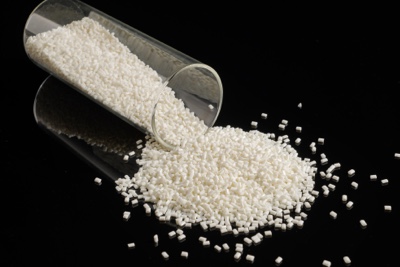
Manufacturers face a choice: buy pre-compounded pellets or mix their own at the press. Buying pre-compounded Injection Grade PP ensures maximum consistency. Every pellet contains exactly 40% talc, ensuring uniform properties shot after shot.
Alternatively, some molders use a Mineral Reinforced Polypropylene masterbatch, mixing it with unfilled PP at the hopper. This offers inventory flexibility but introduces process variance. At high loadings like 40%, obtaining a homogeneous mix at the press is difficult, often leading to inconsistent part weights and mechanical failure. For high-performance TD40 applications, pre-compounded resin is generally the safer strategic choice.
The perception of talc as merely a "cheap filler" used to cut costs is outdated. In modern durable goods manufacturing, 40% Talc Filled Polypropylene acts as a legitimate engineering material. It offers a sophisticated balance of high stiffness, thermal stability, and dimensional precision that rivals expensive thermoplastics like ABS.
While the density increase is a physical reality, the system cost advantages—driven by wall thinning potential, faster cycle times, and lower raw material costs—make it an economically superior choice for many applications. When stiffness and dimensional stability are non-negotiable, specify PP TD40 and leverage the production efficiency gains to offset the weight.
A: The main difference lies in the balance between stiffness and impact strength. PP TD20 (20% talc) is a general-purpose grade with moderate stiffness and good impact resistance. PP TD40 (40% talc) is a structural grade with significantly higher stiffness (flexural modulus) and heat resistance, but it is more brittle and has lower impact elongation. TD40 is used for parts requiring high rigidity and load-bearing capacity.
A: Yes. Standard unfilled polypropylene has a density of roughly 0.90 g/cm³, while 40% talc-filled PP has a density of approximately 1.25 g/cm³. However, because the talc-filled material is much stiffer, engineers can often reduce the wall thickness of the part. This "wall thinning" can neutralize the overall weight increase, resulting in a part that weighs the same but costs less to produce.
A: Yes, in many contexts. If the application requires high stiffness and dimensional stability up to 130°C, PP TD40 is a cost-effective alternative to ABS or Nylon. However, if the part requires extremely high impact resistance or needs to withstand temperatures above 140°C continuously, Nylon or ABS might still be the better option. It depends on the specific thermal and mechanical requirements.
A: Talc reduces cycle time by acting as a nucleating agent. The talc particles provide sites for crystals to form, accelerating the solidification process of the polypropylene. This allows the plastic to stiffen and be ejected from the mold much faster than unfilled PP. Additionally, the higher thermal conductivity of talc helps dissipate heat from the mold more efficiently.
A: PP TD40 is not inherently suitable for long-term outdoor use because polypropylene degrades under UV radiation. Talc does not provide UV protection. To use it outdoors, you must specify a grade that includes a UV stabilizer package to prevent the material from becoming chalky, discolored, and brittle over time.