Views: 0 Author: Site Editor Publish Time: 2026-05-15 Origin: Site
Injection-molded components constantly face extremely strict dimensional tolerance requirements across the automotive and electronics industries. High-temperature operating environments frequently induce warping, shrinkage, and catastrophic failure in standard thermoplastics. Resolving this physical instability presents a massive challenge for engineering teams. You must carefully balance raw material costs, tooling investments, and production cycle times when upgrading to higher-performance resins. You cannot simply swap out polymers without thoroughly understanding the underlying thermal mechanics. If parts lose their structural integrity under heat loads, the entire mechanical assembly fails. This article provides you with an evidence-based framework for evaluating heat-resistant polymer options. We will thoroughly compare chemical material modifications against physical tooling changes. Finally, you will learn practical steps to mitigate processing risks and maintain tight tolerances under demanding thermal loads.
Standard ABS is an amorphous polymer with no true melting point; it begins softening near its glass transition temperature (Tg) of ~100°C, limiting continuous use to ~80°C.
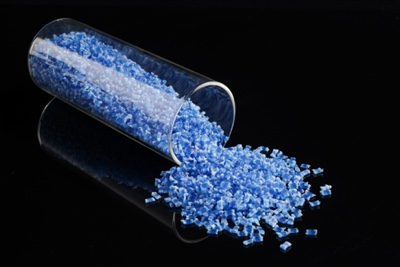
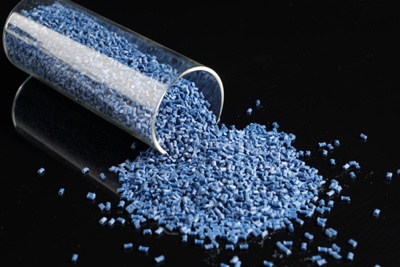
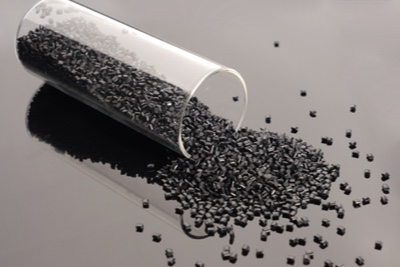
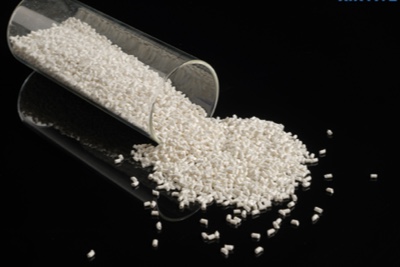
Upgrading to heat-resistant ABS granules (via chemical modification, polymer blending, or composite reinforcement) can increase Heat Deflection Temperature (HDT) by up to 40°C.
Decision-makers must weigh the 15–30% cost premium of modified granules against the high capital expenditure of altering mold architecture.
Successful implementation requires strict moisture control (<0.1%) and precise thermal management to avoid irreversible degradation above 260°C.
To solve dimensional instability, you must first understand how polymers respond to heat at a molecular level. Most dimensional failures originate from the inherent thermodynamic properties of the base resin.
Standard abs acrylonitrile butadiene styrene is an amorphous thermoplastic. Unlike crystalline polymers, it lacks a sharp melting point. Instead, it exhibits a broad softening range. When exposed to rising temperatures, the polymer chains gradually absorb thermal energy, increasing their free volume. The material transitions slowly from a rigid glassy state into a pliable, rubbery state before finally becoming a viscous fluid. This gradual softening makes predicting precise deformation points challenging for engineers.
The molecular structure relies on a delicate balance of three monomers. The rubbery butadiene phase provides excellent impact resistance. It absorbs kinetic energy effectively. However, it completely lacks thermal rigidity. The surrounding styrene-acrylonitrile (SAN) matrix attempts to hold the structure together. Unfortunately, at temperatures between 88°C and 98°C, standard formulations typically undergo approximately 1% deformation under mechanical load. They simply cannot sustain rigidity as the butadiene phase softens.
High-temperature instability rarely happens for just one reason. It is actively driven by two compounding physical factors during operation:
Thermal expansion mismatch: A severe disparity exists between the polymer matrix and the surrounding operating environment. As heat rises, the polymer attempts to expand much faster than metal mating parts, causing buckling.
Residual thermal stress release: Uneven cooling in the injection molding cycle locks internal stresses into the part. When the component experiences operating heat, these frozen-in polymer chains suddenly gain enough mobility to relax. This rapid relaxation manifests visibly as severe warping or shrinkage.
When standard resins fail, material scientists employ three primary methods to push the thermal boundaries. Each method alters the polymer’s behavior differently, presenting unique advantages and trade-offs.
Chemical modification fundamentally rewrites the polymer's DNA. This process relies heavily on high-performance copolymerization.
Mechanism: Manufacturers introduce highly rigid monomers directly into the polymer matrix during synthesis. A common approach involves utilizing Styrene-NPMI-MAH copolymers. These rigid ring structures severely restrict the mobility of the main polymer chain when heated.
Outcome: This method yields spectacular results. It can push the glass transition temperature (Tg) up to 190°C. Impressively, it achieves this extreme heat resistance without sacrificing the base material's inherent processability. You can still mold the resin efficiently.
If you need structural stiffness alongside heat resistance, composite reinforcement provides a highly effective mechanical solution.
Mechanism: Compounders add inorganic fillers into the resin. They use surface treatments, like silane coupling agents, to bond the organic polymer tightly to the inorganic glass or mineral. This chemical bridge prevents fatal delamination under load.
Outcome: Formulating with 30% glass fiber can rapidly elevate the Heat Deflection Temperature (HDT) from roughly 90°C to an impressive 130°C. Trade-off: This rigid filler drastically reduces surface finish quality. It also exponentially increases abrasive tooling wear inside your molds.
Polymer blending operates much like metallurgy. You mix two different plastics to capture the best traits of both.
Mechanism: You blend the base resin with higher-Tg engineering plastics. The most common alloys utilize Polycarbonate (PC/ABS blends) or Polymethyl Methacrylate (PMMA). The stronger polymer framework shores up the weaker one.
Outcome: This method reliably increases overall thermal stability and impact strength. Trade-off: Adding too high a percentage of certain blend materials, specifically PMMA, can severely reduce tensile strength. It also compromises the friction resistance of the final molded part.
Upgrade Method | Primary Mechanism | Thermal Gain | Key Trade-Offs |
|---|---|---|---|
Chemical Modification | Styrene-NPMI-MAH copolymers restrict chain mobility | Tg elevated up to 190°C | Higher base material cost, complex synthesis |
Composite Reinforcement | 30% Glass/Mineral fillers with silane coupling | HDT increased to ~130°C | Rougher surface finish, abrasive tool wear |
Polymer Blends | Alloying with PC or PMMA | Broader thermal stability range | Potential loss of tensile strength/friction resistance |
Engineering teams frequently debate whether to change the material or change the manufacturing process. Both pathways can solve thermal deformation, but they require entirely different investment strategies.
Switching your raw material offers a direct route to dimensional stability.
Pros: You solve deformation immediately without altering your existing mold tooling. You also avoid increasing part wall thickness, which keeps overall part weight down. This path remains ideal for extreme thermal requirements where the HDT must exceed 120°C.
Cons: Formulated specialty resins carry a 15–30% recurring material cost premium. You pay more for every single part produced, shifting the financial burden directly onto unit economics.
If you cannot change the material, you must intervene mechanically.
Pros: This strategy keeps your raw material costs exceedingly low. It proves highly useful when material formulations are strictly locked by medical or automotive regulatory compliance.
Cons: It requires massive upfront CapEx for mold modifications. For example, you might need to machine new ribs greater than 1.5mm in diameter. You must orient these ribs perfectly perpendicular to the direction of thermal expansion.
Process Requirement: Beyond mold changes, you must implement post-mold annealing. You bake the parts at a temperature of Tg + 10°C to 20°C for 30–120 minutes. Following this, you require slow, controlled cooling at 1–5°C per minute to safely release residual stress without warping the component.
Procuring the right material only solves half the problem. Executing a flawless manufacturing run requires immense discipline on the factory floor. Processing elevated-temperature grades demands significantly tighter controls.
Due to the inherent polarity of cyano groups inside the polymer chain, the resin behaves hygroscopically. Standard grades show 0.3–0.8% moisture absorption in humid environments. Heat-resistant granules absolutely must be dried at 80°C for 2–4 hours prior to processing. You must achieve a moisture content of less than 0.1%. Skipping this step allows trapped steam to expand during injection, causing visible surface splay and microscopic dimensional flaws.
You must keep a vigilant eye on barrel temperatures.
Optimal Range: Standard injection temperatures range safely from 160°C to 230°C. Modified grades often process near the top of this range.
The Degradation Threshold: Melt temperatures must never exceed 250°C–260°C. Operating above this critical ceiling triggers catastrophic failure. It causes irreversible polymer chain cleavage and severe oxidation. Furthermore, it initiates the release of toxic volatiles onto the production floor.
If you manage compounding or pelletizing for modified grades, your extruder geometry matters immensely. Standard single-screw machines struggle to mix high-heat additives uniformly. Utilizing twin-screw extruders with a Length-to-Diameter (L/D) ratio of 40:1 or 44:1 yields the absolute highest surface smoothness. This specific ratio guarantees adequate residence time to mix rigid monomers or fillers without thermally degrading the base polymer. It ensures mechanical consistency from the first pellet to the last.
Selecting the correct supply partner heavily influences your project's success. Not all material claims hold up under rigorous laboratory scrutiny. You must audit suppliers proactively.
Never accept a theoretical Tg as proof of performance. You must request concrete testing data based on internationally recognized standards. Demand certification for ASTM D648 to verify the Heat Deflection Temperature (HDT). Additionally, request ASTM D1525 documentation to confirm the precise Vicat Softening Point. These specific load-bearing tests simulate real-world conditions far better than basic thermal scans.
A supplier might provide an excellent initial sample, but mass production requires unwavering consistency. Evaluate the manufacturer's chosen polymerization process carefully. Ask whether they utilize emulsion polymerization or mass/bulk polymerization. Bulk polymerization generally provides superior molecular weight uniformity. This uniformity directly dictates and stabilizes your expected shrinkage rates across different production batches.
Procuring Acrylonitrile Butadiene Styrene should come with dedicated engineering assistance. Prioritize suppliers who actively provide data on thermal expansion coefficients (CTE). Superior suppliers also offer comprehensive mold flow analysis support. They will help your tooling engineers precisely adjust gating locations and redesign cooling lines to accommodate the modified resin’s unique flow behavior.
Upgrading to heat-resistant ABS granules offers a highly reliable, scalable path to maintaining extremely tight dimensional tolerances under aggressive thermal load. By choosing the right chemical modification, composite, or blend, you can often bypass the urgent need for expensive mold re-designs.
As you move forward, keep these actionable next steps in mind:
Strictly audit your molded part's true continuous operating temperature, capturing peak thermal spikes.
Compare the required HDT of modified ABS blends against the upfront tooling costs and cycle time penalties of post-mold annealing.
Request verified material samples from shortlisted suppliers for localized stress testing and flow analysis before committing to high-volume production.
A: ABS is an amorphous polymer and does not have a sharp melting point. Instead, it transitions through a softening range beginning around 100°C, transitioning into a viscous fluid for processing between 200°C and 260°C.
A: Standard ABS deforms in boiling water (100°C). For continuous use in or near boiling conditions, engineers must specify high-heat stable grades (HDT > 110°C) or PC/ABS alloys (HDT ~125°C).
A: Yes. While heat alone causes warping, combining high temperatures with UV radiation rapidly accelerates embrittlement, yellowing, and impact strength loss. Outdoor thermal applications often require co-extruded UV-blocking layers or switching to an ASA resin.
A: High temperatures lower the resistance of ABS to chemical attack. While resistant to water and inorganic salts, exposure to glacial acetic acid, certain oils, or chlorinated hydrocarbons under thermal load will trigger rapid stress cracking.