Views: 0 Author: Site Editor Publish Time: 2026-07-30 Origin: Site
The transition to 800V and 1000V architectures in electric vehicles leaves zero margin for error in electrical insulation, thermal management, and physical durability. High-voltage environments drastically increase the risk of electrical arcing, tracking, and thermal runaway. Selecting the wrong polymer or formulation risks catastrophic failure, compliance rejection, and costly product recalls. The performance profiles required for fast-charging EV connectors increasingly mirror the ultra-high-power demands of next-generation AI data center power delivery systems, forcing automotive engineers to design for dual-use reliability. Identifying the optimal plastics for EV high voltage connectors requires balancing stringent flame retardancy standards (UL94 V-0) with dielectric strength, environmental weatherability, and scalable manufacturability. This guide breaks down the technical evaluation of high-performance polymers.
Regulatory Baseline: UL94 V-0 compliance is non-negotiable, but modern OEM standards increasingly mandate halogen-free and red phosphorus-free flame retardant (FR) packages to prevent electrical degradation, toxic outgassing, and corrosive byproduct formation.
Electrical vs. Thermal Trade-offs: Materials must maintain a high Comparative Tracking Index (CTI > 600V, PLC 0) while withstanding continuous high operating temperatures (RTI) during megawatt-level ultra-fast charging.
Material Hierarchy: PBT and PA (Nylon) dominate high-volume production due to cost-to-performance ratios, while Modified Polyphenylene Ether (mPPE) fills critical gaps in moisture stability, and PEEK, PEI, and PPS are reserved for extreme thermal or low-volume machined components.
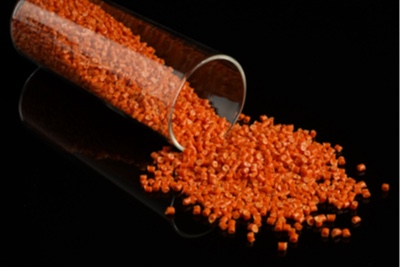
Safety Aesthetics & Additive Chemistry: Achieving and maintaining the mandatory safety-orange color (RAL 2003) over a 15-year lifecycle requires specialized polymeric colorants that do not compromise dielectric strength or thermal stability.
Table of Contents
Defining the baseline resistance to electrical breakdown under continuous high-voltage stress dictates the safety of 800V to 1000V+ systems. Polymers must exhibit exceptional dielectric strength to prevent electrons from punching through the housing wall. When you design a connector for a 350kW fast charger, the insulation barrier must handle transient voltage spikes without degrading. Managing energy loss and heat generation within the connector housing during high-frequency AC or transient DC charging spikes requires materials with a low dielectric constant and dissipation factor. High dissipation factors lead to localized heating. This accelerates polymer degradation and increases the risk of thermal runaway. We measure this using ASTM D149 standards, ensuring the material can withstand at least 15 to 20 kV/mm depending on the wall thickness.
Preventing carbon tracking is a primary safety requirement. You need PLC 0 (CTI ≥ 600V) ratings to prevent the formation of conductive carbon paths and short circuits in contaminated, high-voltage environments. Surface contamination from dust, moisture, and road salts creates conductive bridges. When voltage is applied across these bridges, localized arcing carbonizes the plastic surface. CTI retention under load is equally important. Mechanical stress, thermal cycling, and humidity degrade a polymer's surface resistance over time. Engineers must evaluate how materials maintain their tracking resistance after thousands of hours of field exposure. A material might test at 600V out of the mold but drop to 400V after 1,000 hours of 85°C/85% RH environmental testing.
Performance Level Category (PLC) | CTI Range (Volts) | Suitability for 800V+ EV Connectors |
|---|---|---|
PLC 0 | ≥ 600V | Mandatory for unsealed high-voltage areas |
PLC 1 | 400V - 599V | Acceptable for sealed, protected internal modules |
PLC 2 | 250V - 399V | Unacceptable for high-voltage applications |
PLC 3 | 175V - 249V | Low-voltage signal connectors only |
Evaluating how polymers degrade over a 10-to-15-year vehicle lifecycle under continuous thermal loads is mandatory. Ultra-fast DC charging and under-hood heat subject connectors to extreme thermal stress. The Relative Thermal Index (RTI) indicates the maximum temperature a polymer can withstand continuously while retaining 50% of its specific properties. For modern EV architectures, an electrical RTI of at least 130°C to 150°C is standard. Heat Deflection Temperature (HDT) ensures structural integrity during short-term thermal spikes. Connectors must not deform when subjected to sudden temperature surges during peak charging loads. If the HDT is too low, the terminal pins will shift under load, causing poor contact, increased resistance, and eventual melting of the connector housing.
The requirement for tight tolerances ensures robust sealing against moisture, salt spray, and road debris ingress over the connector's lifespan. IP67 and IP69K ratings demand materials that do not warp or swell. Preventing degradation in outdoor charging infrastructure exposed to UV radiation, rain, and extreme seasonal temperature swings requires high hydrolysis and UV resistance. Polymers prone to hydrolysis will become brittle and crack, compromising the high-voltage isolation barrier. We test this using ISO 4892-2 xenon-arc exposure. If the plastic loses more than 20% of its tensile impact strength after 1,000 hours of UV exposure, it fails the validation for external charging inlets.
Designing housings with thin-walled, complex internal geometries is necessary to accommodate low-voltage High Voltage Interlock Loop (HVIL) shunt circuits, pins, and microswitches. These components protect operators by cutting power during disconnects. The chosen polymer must flow easily into intricate mold cavities without losing mechanical strength or flame retardancy at the weld lines. Wall thicknesses in these HVIL channels often drop below 0.8mm. The plastic must maintain a UL94 V-0 rating at this specific thickness, which requires highly optimized flame retardant dispersion during the compounding process.
Testing methodology relies on horizontal and vertical burn tests, flame self-extinguishing times, and the strict prohibition of flaming drips. UL94 V-0 is the strict baseline for high-voltage applications. There is a direct correlation between high-voltage arcing risks and the necessity of immediate self-extinguishing behavior in EV safety architectures. Materials must stop burning within 10 seconds after the ignition source is removed, preventing the spread of fire to adjacent battery modules or cabin structures. Furthermore, the test requires that no flaming drips ignite the cotton indicator below the specimen. This prevents secondary fires in the lower battery tray.
Global OEMs are phasing out brominated and chlorinated flame retardants. These legacy additives cause corrosive outgassing during thermal events, toxicity during combustion, and severe recycling challenges. Halogen-free alternatives affect polymer density, mechanical ductility, and processing windows. While safer for the environment and electrical contacts, halogen-free FR packages often require higher loading levels. This can reduce the material's impact resistance and make injection molding more challenging. You will often see a 10% to 15% drop in elongation at break when moving from a brominated FR package to a halogen-free metal hydrate system.
High-humidity degradation makes red phosphorus risky. It leads to phosphoric acid generation, which causes tracking failures, metal contact corrosion, and unexpected short circuits. Advanced nitrogen-phosphorus and metal hydrate FR packages are replacing legacy systems. The rise of organic phosphinates, melamine derivatives, and magnesium hydroxide provides stable, non-corrosive flame retardants. These modern additives maintain high CTI values without compromising the long-term reliability of copper and silver-plated terminal pins. We have seen entire battery pack recalls caused by red phosphorus outgassing corroding the silver plating on high-voltage busbars.
PBT offers excellent dimensional stability, high dielectric strength, low moisture absorption, and superior chemical resistance to automotive fluids. It is the go-to material for high-volume injection-molded ultra-fast charging gun connectors, battery module headers, and high-voltage busbar brackets. However, PBT has a lower continuous operating temperature compared to advanced specialty polymers. It requires precise formulation, such as specialized glass-fiber coupling agents, to maintain high CTI when glass-filled. Standard glass fibers can create capillary paths for moisture, dropping the CTI from 600V to 400V. Using specialized sizing on the glass fibers prevents this wicking effect, keeping the PBT housing safe for 800V applications.
Polyamides deliver superior mechanical strength, high impact resistance, excellent weld-line strength, and inherently high CTI capabilities. They are ideal for structural connector housings, lever locks, and components requiring high physical durability or snap-fit assemblies. The main limitation is inherent moisture absorption (hygroscopicity), which alters dimensional stability and dielectric properties. Engineers must select advanced long-chain or semi-aromatic polyamides like PA9T, PA4T, or PA66/6I copolymers to mitigate water intake. A standard PA66 connector might absorb up to 8% moisture by weight in a humid environment, causing the housing to swell by 2%. This swelling destroys the IP67 seal integrity. Moving to a PA9T reduces moisture absorption to under 1%, preserving the seal.
mPPE provides extremely low moisture absorption, exceptional dimensional stability, high hydrolysis resistance, and low specific gravity. This offers significant lightweighting advantages. It excels in connectors requiring high dimensional precision in humid environments, battery cell spacers, and high-voltage junction boxes. mPPE has lower weld-line strength compared to polyamides. It requires precise tool design to avoid structural weak points in complex connector geometries. You must place injection gates away from high-stress areas like snap-fit latches. The low specific gravity of mPPE (around 1.06 g/cm³) allows for up to 20% weight savings compared to heavily glass-filled PBT, which is highly beneficial for overall vehicle range.
PPS features exceptional chemical resistance, inherent flame retardancy (UL94 V-0 without additives), and a high continuous use temperature up to 200°C+. It is best used for connectors directly exposed to aggressive cooling fluids, battery cell-contacting systems, and extreme localized engine-bay heat. PPS suffers from inherent brittleness and low impact strength. High glass fiber loading is required, which can complicate intricate snap-fit connector designs and increase tool wear. When designing with PPS, engineers must use thicker hinge designs and avoid sharp internal corners to prevent stress cracking during assembly.
These materials offer top-tier thermal, mechanical, and electrical properties. They are inherently flame retardant with superior mechanical retention at elevated temperatures. They suit low-volume prototyping, highly specialized aerospace-grade EV applications, or components requiring CNC machining from rod stock. Prohibitive raw material costs limit their use in standard high-volume consumer EV platforms. High processing temperatures also require specialized high-temperature injection molding equipment. PEEK requires mold temperatures exceeding 180°C and melt temperatures around 380°C, necessitating oil-heated tooling and specialized hot runner systems.
Polymer Type | Moisture Absorption (24h) | Continuous Use Temp (RTI) | Primary EV Application |
|---|---|---|---|
FR-PBT | < 0.1% | 130°C - 140°C | Standard HV housings, busbar brackets |
PA66 (Standard) | 1.5% - 2.5% | 130°C - 150°C | Structural latches, dry environments |
mPPE | < 0.06% | 110°C - 120°C | Lightweight junction boxes, humid areas |
PPS | < 0.02% | 200°C - 220°C | Coolant-exposed connectors, extreme heat |
High-voltage components must remain easily identifiable as safety hazards throughout the vehicle's service life. Standard orange pigments degrade to brown or yellow under high-heat processing or continuous thermal aging. Utilizing specialized heat-stabilized colorant packages preserves the mandatory RAL 2003 hue. These polymeric and organic colorants must not degrade CTI, dielectric strength, or mechanical elongation over time. We test color stability using the CIELAB color space. A Delta E shift of more than 3.0 after 1,000 hours at 130°C is considered a failure. The pigment must survive the initial 300°C injection molding process without burning and then survive 15 years in a hot engine bay.
Balancing structural rigidity with electrical safety requires careful management of glass fiber and bead interactions. "Glass fiber wicking" occurs when fibers act as capillary paths for moisture, drastically reducing insulation resistance and CTI. Managing the fragile balance between impact toughness and flame retardancy is essential. Higher FR loading typically reduces elongation at break, which can compromise vehicle assembly and crash safety requirements. To counter this, compounders add elastomeric impact modifiers. However, these modifiers are highly flammable. Finding the exact ratio of impact modifier to flame retardant to glass fiber is the core challenge in formulating EV connector plastics.
Halogen-free flame retardants, glass fibers, and mineral fillers are highly abrasive to injection molds. Specifying hardened steel tooling, such as high-chromium through-hardened steels (like Stavax or H13), is necessary to maintain mold life. Specialized PVD coatings and optimized gate designs help minimize shear and localized wear. Proper venting prevents the buildup of trapped gases that can cause tool corrosion and part defects. For heavily loaded FR-PBT, vent depths must be kept strictly between 0.010mm and 0.015mm. If the vent is too deep, the low-viscosity material will flash. If it is too shallow, the FR additives will burn, leaving corrosive deposits on the tool surface.
Highly loaded FR plastics suffer from reduced flowability. This risks short shots, surface defects, or poor weld-line strength in thin-walled connector geometries. Implementing wider processing windows, sequential valve gating, and high-vacuum venting prevents gas burns and ensures full part packing. Mold flow analysis is critical during the design phase to optimize gate locations and wall thicknesses. You must position the gates so the material flows parallel to the longest dimension of the connector, aligning the glass fibers for maximum strength and minimizing stress concentrations at the HVIL pin locations.
Relying on single-source, highly proprietary halogen-free FR compounds creates significant supply chain risks. Standardizing around globally available polymer backbones like PBT, PA, and mPPE ensures resilience. Qualify secondary FR formulations early in the validation process. Dual-sourcing strategies protect production lines from unexpected market disruptions and raw material shortages. When validating a secondary material, you must run the full suite of USCAR-2 or LV214 mechanical and electrical tests to ensure the shrink rates match the primary material. If the shrink rates differ by more than 0.2%, the secondary material will not fit in the existing injection mold.
There is no single universal plastic for EV high voltage connectors. Material selection requires a multidimensional trade-off dictated by operating voltage, peak thermal loads, mechanical assembly requirements, and production volume. Follow these actionable steps to optimize your connector designs:
Default to FR-PBT for standard high-voltage housings where dimensional stability and low moisture absorption are critical.
Shift to specialty polyamides when structural durability and robust snap-fits are paramount.
Select mPPE for lightweighting and environments demanding extreme hydrolysis resistance.
Utilize PPS for applications exposed to aggressive cooling fluids and extreme under-hood temperatures.
Validate all colorant packages to ensure RAL 2003 safety orange compliance does not compromise CTI or dielectric strength.
Selecting the right plastic for EV high voltage connectors requires balancing electrical insulation, flame retardancy, thermal performance, mechanical strength, and manufacturing efficiency. Choosing materials based on specific application requirements helps improve connector reliability, ensure regulatory compliance, and support the long-term performance of electric vehicle power systems.
Xinyite is a trusted manufacturer specializing in high-performance modified engineering plastics for demanding electrical, automotive, and industrial applications. Backed by extensive expertise in flame-retardant compounds, reinforced polymers, and customized material solutions, Xinyite helps global manufacturers develop safer, more reliable, and higher-performing EV components while meeting stringent international safety and quality standards.
A: UL94 V-0 ensures the plastic self-extinguishes within 10 seconds after the removal of an ignition source. In high-voltage EV systems, electrical arcing can generate intense heat. V-0 compliance prevents the connector housing from sustaining a flame, mitigating the risk of thermal runaway and vehicle fires.
A: CTI measures a polymer's resistance to electrical tracking across its surface when exposed to voltage and contamination. A high CTI (PLC 0, ≥ 600V) prevents the formation of conductive carbon paths. This stops short circuits and catastrophic failures in dirty or humid environments.
A: Halogenated flame retardants release toxic and highly corrosive gases when exposed to high heat or fire. These gases degrade electrical contacts, pose health risks to occupants, and complicate end-of-life recycling. Halogen-free alternatives offer safer, non-corrosive performance.
A: Standard polyamides absorb moisture from the environment, which acts as a plasticizer. This absorption reduces the material's mechanical stiffness, alters dimensional tolerances, and lowers its dielectric strength. Specialty semi-aromatic polyamides are used to resist this moisture uptake.
A: No. Standard orange pigments often degrade, turning brown or yellow under continuous thermal stress or high-temperature injection molding. EV connectors require specialized, heat-stabilized colorants to maintain the mandatory RAL 2003 safety orange warning color over a 15-year lifespan.
A: Glass fiber wicking happens when moisture travels along the microscopic interface between the glass fiber and the polymer matrix. This creates a conductive path that lowers the material's insulation resistance. Using specialized chemical sizing on the glass fibers prevents this moisture ingress.